As the Olympics and the new football season are about to
begin in earnest, be prepared for lots of references to 'great' teams, 'great'
performances and 'great' individuals, often spoken in the heat of the moment or
in post event interviews. It must be said that this is never the best time for
a considered response and as a result such pronouncements are often full of
exaggeration and hyperbole.
However, whilst it would be unfair to dismiss all such
statements, it is worth pausing for breath, taking a step back and considering
what the words 'great' and 'greatness' really mean and under what circumstances
should they be used.
Wikipedia defines 'greatness' as being "a concept of
a state of superiority affecting a person, object or place. 'Greatness' can also
be referred to individuals who possess a natural ability to be better than all
others. The concept carries the implication that the particular person, when
compared to others of a similar type, has clear advantage. Application of the
terms 'great' and 'greatness' is dependent on the perspective and subjective
judgements of those who apply them. Whereas in some cases the perceived
'greatness' of a person might be agreed upon by many, this is not necessarily
the case, and the perception of 'greatness' may be both fiercely contested and
highly individual".
Indeed that may be the case, but what should not be in
dispute is that such words should only be used very sparingly as 'greatness' is
a very rare commodity.
Of course, context is paramount and whilst an individual
might perform what might be considered a 'great' feat in a single moment, that
doesn't necessarily mean that they are a sporting 'great', far from it.
'Greatness' has to be earned through longevity, a lifetime of truly world class
exceptional performance way above that individual's piers in their given sport.
Furthermore, it can be difficult to measure 'greatness'.
In most individual sports, there are numbers, rankings and titles, but in team
sports it can be far more difficult and 'greatness' should not really be
decided on opinion, albeit there will be certain exceptions. No one could deny
that George Best is a footballing 'great', even if he does not have all the
statistics to back up such a claim.
 One increasingly high profile sport which is full of
statistics is cycling and Chris Froome's recent third Tour de France victory
surely qualifies him for 'greatness' ? Or does it ? Froome is the fourth man to
win the Tour three times yet four men have won it four times, all behind the
disgraced Lance Armstrong, whose seven Tour victories have been deleted from
the official records.
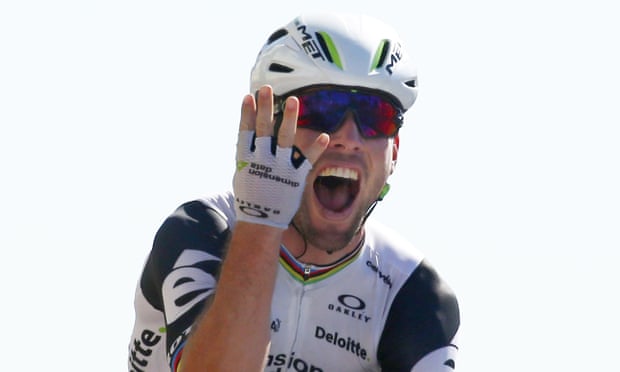
Insofar as Chris Froome is concerned, he has never really
won the hearts of the British public because of his South African upbringing
and perceived lack of charisma, but this should not detract from his phenomenal
achievements, which in any other era would be considered some of the greatest
performances ever, he has just been a little unfortunate to be competing in an
age with the incredibly popular 'Cav', 'Brad' and Hoy.
Yet sports relying on some form of apparatus or vehicle,
such as a bicycle or a car, with the supporting team as back up, can give the
individual a specific advantage.
In motor racing, Michael Schumacher was most certainly
considered a true 'great' after his seven Drivers' Championships and 91 race
victories driving for Ferrari, but his return from retirement to drive a far
less superior Mercedes returned him to the rank of 'also ran' in the Drivers'
Championship. Ditto Sebastian Vettel, now at Ferrari.

Where the playing field is level, an individual's success
will largely be dependent upon the level of competition. This is no better
illustrated than in tennis. Andy Murray is without doubt a 'great' from these
shores, but can he be considered one on the world stage? Three grand slam
tournament victories, including two at Wimbledon, is incredible but losing in
eight other grand slam finals to date indicates that he has probably not quite
reached what might be termed 'greatness' at world level.

However, in this golden era, Roger Federer with 17 grand
slams, Rafael Nadal (14) and Novak Djokovic (12) most certainly have. In the
same way, in previous eras, Pete Sampras with 14, Roy Emerson (12), Bjorn Borg
and Rod Laver (11), Fred Perry, Ken Rosewall, Jimmy Connors and Andre Agassi
(8) and John Newcombe, Mats Wilander and John McEnroe (7) achieved greatness.
However, despite winning 8 grand slams, it could be argued that Ivan Lendl
possibly did not. How ironic then that Lendl should have had such success now
as coach to Murray, perhaps passing on some of the tactics and mental toughness
that he sometimes struggled to attain himself.
In the women's game, for 'greats', read Margaret Court, Billie Jean King, Chris
Evert, Martina Navratilova, Steffi Graf and Serena Williams. They are
universally acknowledged as being so, given their complete dominance of the
game. Indeed, a cursory glance of the record books unsurprisingly reveals that
these six players, plus Helen Moody, do indeed hold the most majors titles,
Court's 24 narrowly eclipsing Graf and Williams on 22.
Whilst tennis can be dominated by a few individuals,
largely because of the adversarial 'head to head' nature of the sport, golf is
an entirely different ball game. Here, players are not only battling against
each other but also against the course, the conditions and themselves. So much
so, that the past five majors have been won by five different golfers, each for
the first time. Indeed, at the moment, it would seem as though any major or significant
tournament could be won by anyone in the world's top fifty, which would be
unheard of in tennis.
For golfing greats we often think of the past masters,
the likes of the legendary Walter Hagen, who won 11 major championships, Ben
Hogan and Gary Player (9), Tom Watson (8), Sam Stead, Bobby Jones and Arnold
Palmer (7) and the greatest of them all, Jack Nicklaus, who still holds the
record of 18.
It is often suggested that a sportsperson sometimes
achieves even greater plaudits upon their death. They are brought back into the
public consciousness and their career highlighted, often through rose tinted
spectacles. For Seve Ballesteros, whilst he certainly achieved huge acclaim
upon his passing, he was always considered a treasure and a legend of the game.
For sure he had the trophies, 5 majors, but he also had the character and a
certain joie de vivre in the way he played the game. He was struck down far too
early but his greatness lives on.
Muhammad Ali is, in many eyes, the 'greatest' sportsman
that ever lived and his recent death was commemorated across the world. Indeed,
he often pronounced that 'he was the greatest'! He was iconic and touched
millions of lives, cutting through barriers, and such was his popularity and
notoriety, it is often forgotten that he won the World Heavyweight Championship
of the World on three separate occasions, which was some feat.

Like motorsport, horse racing is very much dependent upon
the tools at the sportsman's disposal. A poor car will win nothing, ditto an
old nag. The better drivers get to drive the best cars and in the same way, the
better jockeys get to ride the best horses. However, jockeys need to prove
themselves before they get the best rides and then, when then they are on board
the best horses, they have to make sure that they return to the winners'
enclosure to justify their selection. Their successes are measured in every
way.
As a jump jockey, AP McCoy rode horses the length and
breadth of the country and in winning the champion jockey accolade for twenty
consecutive years, he achieved a level of 'greatness' that is unlikely ever to
be repeated. Before him, only Peter Scudamore with seven and John Francome with
eight compare.

Cricket is arguably the sport with the most statistics,
so much so that every year the Wisden Cricketing Almanac is produced, a yellow
covered tomb, which seeks to record all the statistics from the previous season
plus updating all records across the world. The nature of cricket has changed
enormously in recent years with the huge rise in the amount of one day cricket
being played and more latterly, the foreshortened version of the game in the
form of Twenty 20. However, whilst these changes have increased public interest
across the world and spectator figures, Test Match cricket is still regarded as
the pinnacle of the game.
As the game has grown and more international cricket is
played across the world, it is perhaps no surprise that the leading run makers
in test cricket come from the modern era. Sachin Tendulkar leads the way and he
is followed by Ricky Ponting, Jacques Kallis, Rahul Dravid and Kumar
Sangakkara. What is perhaps more surprising is that these five players have
also scored the most test centuries and the most test half centuries.
Furthermore, three of them feature in the top five catchers too.
Cricket is one sport where the term 'greatness' is often
discussed and debated by commentators and followers alike, the term being one
aspired to and held in huge regard. Perhaps it is because of the nature of the
game, being played over five days, that there is plenty of time to talk and
reflect between the action taking place on the field. In this regard,
statistics can only tell part of the story.
Whilst 'our' Geoffrey from Yorkshire was once the leading
run scorer in test cricket, many will argue that he was not a 'great'. That
term should arguably be held by players to whom the opposition really feared,
not only through weight of runs or wickets, but through the way they played the
game and their ability to change the course of a match in a relatively short
period of time. Into this category one must consider the claims of those
batsmen who have scored the fastest hundreds in test cricket, namely Brendon
McCullum (54 balls), Misbah-ul-Haq and Viv Richards (56) and Adam Gilchrist
(57). Indeed Sir Viv was known as 'the King', such was his unique skill,
swashbuckling approach and breathtaking stroke play. Upon his arrival at the
wicket, it was often said that he had the affect of clearing bars, as no one
wanted to miss him bat. Add to that category Virender Sehwag, Chris Gayle and
Brian Lara, who are also the only three batsmen to have scored two test match
triple hundreds, along with Bradman. 'Greatness' indeed.
As to bowlers, the cricketing world has been blessed by
having three phenomenal spinners, who hold the top three positions in the
leading test match wicket takers. The record is held by Muttiah Muralitharan
with 800 test wickets and he is followed by Shane Warne (708) and Anil Kumble
(619). The closest faster bowlers are Glenn McGrath (563) and Courtney Walsh
(519). Previous holders of the record include Alec Bedser, Brian Statham, Fred
Trueman, Lance Gibbs, Dennis Lilee, Ian Botham, Richard Hadlee and Kapil Dev,
some names indeed.
Whilst cricket is a team sport that is really decided by
measurable individual performances, the same cannot be said of rugby union and
football. Whilst certain individuals score the points, tries and goals,
'greatness' is far more subjective, as others do not and cannot contribute in
that way.
In rugby union, a look at the record books reveals that
the most capped international players are Richie McCaw with 148 caps, Brian
O'Driscoll (141) and George Gregan (139). Leading points scorers are Dan Carter
(1598 points), Jonny Wilkinson (1246),
Neil Jenkins (1090) and Ronan O'Gara (1083) whilst the leading international
try scorers are Daisuke Ohata from Japan with 69 tries, David Campese and Bryan
Habana (64) and Shane Williams (60).

Most of these are undeniably 'greats' of the game, but it
is necessary to look beyond the statistics. No one could possibly dispute the
claims of the legendary All Black, Jonah Lomu, who quite literally transformed
the game in the 1990s; his colleague Zinzan Brooke; the Welsh wizards Phil
Bennett, Barry John, Gareth Edwards, JPR Williams and Jonathan Davies; the
Lions legend Willie John McBride; the
French flair of Serge Blanco and Phillippe Sella, and dynamism of Jean-Pierre
Rives and even the dour English World Cup winning captain, Martin Johnson, who
will forever remain a legend for his tough uncompromising approach and
leadership qualities.
Football offers similar dilemmas. In the current game it
could be argued that only Lionel Messi and Cristiano Ronaldo have achieved true
'greatness', through their undoubted talent and weight of goals over such a
long period, but neither are World Cup Winners. Diego Maradona and Pele hold
that accolade and are rightly lauded for performing and achieving on the
highest stage.

So, as football rather ironically kicks off the 2016
Olympics, before the Opening Ceremony had even taken place, it is only right to
consider the 'greatness' or otherwise of athletes and Olympians. It is also a
matter of some debate as to whether a 'great' Olympian also has to have held a
world record, to achieve true 'greatness'.
Incredibly some do and of the men, the likes of Usain
Bolt, Michael Johnson, David Rudisha, Hicham El Guerrouj, Kenenisa Bekele,
Haile Gebrselassie, Aries Merritt, Kevin Young, Javier Sotomayor, Renaud
Lavillenie, Jonathan Edwards, Randy Barnes, Jurgen Schult, Yuriy Sedykh, Jan
Zelezny and Ashton Eaton are all current world record holders who also won
Olympic gold.

Many others achieved the same Olympic gold / world record 'double' in previous era's including iconic Brits such as Mary Peters, Sally Gunnell, Daley Thompson, Steve Ovett and Sebastian Coe, in addition to the previously mentioned Jonathan Edwards who is still one of only two British athletes who currently hold a world record, the other being Paula Radcliffe, who unfortunately was not able to match her feats in the Olympic arena. This was arguably her greatest disappointment in a phenomenal career. All are undisputed 'greats' in their chosen events.
Others British athletes who do not possess the world's
fastest times but won gold medals surely do too and into this category fall the
likes of the legendary Mary Rand, Lynn
Davies, David Hemery, Allan Wells, Linford Christie, Tessa Sanderson, Denise
Lewis, Kelly Holmes, Christine Ohuruogo, Jessica Ennis, Greg Rutherford and Mo
Farah.

It is slightly ironic that for all Fatima's domination,
it was the 'lesser Tessa' who won the Olympic gold. Therein lies the dichotomy.
Who was the greater javelin thrower, Fatima or Tessa and what is the greater
achievement, an Olympic gold or a world record ?

Many will argue that an Olympic gold means more as the event only takes place every 4 years yet others will contend that a single event on a given day may not be won by the best athlete due to an unusual set of circumstances such as injury or loss of form, so that the 'greatest' has to be the individual who has achieved the world's best time, distance or height. There is probably no right answer, other than the fact that all must have achieved a level of 'greatness' in achieving these goals.
However the Olympics is not just about track and field
and the Olympic movement has expanded over the years to include a whole
multitude of sports, some of which offer the opportunity to win several gold
medals at one single games. The best example of this is probably in swimming,
where Michael Phelps with 18 gold medals, Mark Spitz (9) Matt Biondi (8) and
Ian Thorpe (5) have written themselves into the record books and realms of
'greatness' with their sheer number of victories. The most successful British
swimmer in history, Rebecca Adlington received similar adulation on these
shores despite winning only a fraction of their medals.
Gymnastics offers similar possibilities and the golden
era in the 1970's when Nadia Comaneci won 5 gold medals, Nellie Kim (5) and Olga
Korbut (4) were glorious times and their collective 'greatness' may never be
repeated.
Cycling, which was referred to previously, rowing,
sailing, canoeing and equestrian can all be considered in a similar category
and are all sports where Britain has achieved considerable success in recent
years.
Chris Hoy, with six gold medals, is the most successful
cyclist in Olympic history, Steve Redgrave (5) is the most notorious Olympic
rower and Ben Ainslie (4) is the most successful ever Olympic sailor, all
legends of their own sports. In such circumstances it can be easy to forget the
likes of Matthew Pinsent (4) Bradley Wiggins (4) and Jason Kenny (3) in
addition to the plethora of single and double gold medallists of whom Anthony
Joshua, Nicola Adams, Alistair Brownlee, Laura Trott, Charlotte Dujardin and
Katherine Grainger are worthy of specific mention.

The Olympics is considered the greatest show on earth and
its appeal is far reaching. Certain athletes have not only won gold medals but
in doing so have achieved something incredibly special, not only for themselves
but also for their sport and their nation. In addition to those already
mentioned, the achievements of Jesse Owens, Ed Moses, Sergei Bubka, Jackie
Joyner-Kersee, Fanny Blankers-Koen, Cathy Freeman and Carl Lewis, who
incredibly won nine gold medals, were iconic and encapsulated true 'greatness'.
The tag of 'greatness' is not easily earned, it is
incredibly rare and only achieved by the very few. It must be acknowledged as
such and not banded around like confetti. Indeed, it can be impossible to value
and some might say that sporting 'greatness' is worth its weight in gold.

No comments:
Post a Comment